Leaning trees are a common sight after a heavy storm, and the focus keyword Leaning Trees captures that immediate visual warning. Many homeowners in the Fredericksburg area notice a tilt and assume the tree will right itself as the soil dries, but that tilt can signal deeper structural problems that put people, property, and utility lines at risk. Recognizing when a lean is superficial and when it is dangerous is the first step to preventing damage.
When the ground becomes saturated, a tree that once stood firm can suddenly become unstable, sometimes without obvious signs until it is too late. A leaning tree near a house, driveway, or playground raises the stakes because falling limbs or a whole uprooted tree can cause costly damage and injury. Understanding the mechanics of why trees lean and the warning signs that point to imminent failure helps property owners make safer choices.
This article explains the causes of leaning trees after heavy rain, key visual and physical warning signs to watch for, immediate safety steps, and how professionals assess and respond to unstable trees. The goal is to give Fredericksburg homeowners clear, practical guidance so they can make informed decisions about tree care and risk reduction without delay.
Why Leaning Trees Become Dangerous After Heavy Rain
A direct answer is that heavy rain weakens the soil and root support that hold trees upright, which increases the risk of uprooting or breakage. When soil gets saturated, it loses cohesion and can shift or wash away from root systems. Trees that relied on shallow roots or that have root damage are especially vulnerable during and after significant rainfall.
A secondary problem is that saturated soil can amplify existing structural defects in the tree itself, turning what was a slow-developing issue into an immediate emergency. A tree with internal decay, root rot, or a previously undetected crack can go from stable to hazardous in a single storm. That is why monitoring trees after heavy weather is an important part of home and property safety.
How to Recognize Warning Signs in Leaning Trees
A direct answer is that visible changes in the tree and its surrounding soil are the best early indicators that a lean is becoming dangerous. Watch for new cracks in the trunk, splitting at branch unions, raised soil around the root crown, or roots exposed or torn from the ground. Canopy changes, such as a sudden lean toward one side or more weight on one side after losing limbs, also signal increased risk.
Large, dead branches, thin leaf cover, unusually shaped leaves, and fungi are critical warning signs of tree structural defects and potential hazards. This list of signs is useful to compare with what you observe on your own property, since fungal fruiting bodies and deadwood often indicate internal decay that is not obvious from the outside.
A careful inspection also includes looking at nearby trees and soil conditions. Trees on slopes, in compacted soil zones, or next to new construction can lose root stability more quickly once heavy rains arrive. Document what you see so professionals can evaluate the progression of the problem if needed.
Immediate Steps to Take When You Spot a Leaning Tree
A direct answer is that you should secure the immediate area and avoid doing any work that could put you or others at risk until a professional assessment is complete. Keep people and pets away from the lean direction and move vehicles or outdoor equipment out of the potential fall zone. These simple actions reduce the chance of injury and limit property exposure should the tree fail suddenly.
Next, assess access and utilities visually without getting too close to the tree. If the tree is near power lines, do not try to move branches or limbs yourself, and treat the area as a hazard until utility professionals or qualified arborists can evaluate the scene. Collect photos from a safe distance and note any changes you observe over several hours or days so that professionals have accurate information.
If you have property documents or insurance information related to trees, gather those details in case they are requested by the assessor. Branson’s Tree Service provides documentation about insurance and project cleanup in estimates and project files, and learning what documentation will be needed ahead of time streamlines evaluation and planning.
Why Professional Assessment Matters for Leaning Trees
A direct answer is that a trained arborist brings the tools and expertise to determine whether a leaning tree can be stabilized or must be removed for safety. Professionals examine root structure, trunk integrity, decay presence, soil conditions, and the tree’s lean trajectory to make an informed recommendation. This technical evaluation reduces guesswork and helps prioritize risk.
An ISA certified arborist with field experience can perform tests that are impractical for most homeowners, such as sounding the trunk for hollow sections or evaluating root plate stability under different moisture conditions. You can learn more about the qualifications of a trained professional on the About Our Certified Arborist page, which explains typical experience and certification considerations that matter in an assessment.
Working with knowledgeable professionals also ensures that any recommended interventions respect the health of remaining trees and comply with local regulations and safety standards. In communities like Fredericksburg, VA, where trees are an important part of the landscape, a balanced approach preserves safety and tree health when possible.
Common Solutions and When Hazardous Tree Removal Is Necessary
A direct answer is that solutions range from monitoring and targeted pruning to stabilization and hazardous tree removal, depending on the level of risk and the tree’s condition. Minor issues such as small leaning angles with no root damage may be monitored or corrected with crown thinning to rebalance weight distribution. In many cases, cabling or bracing can provide temporary support for high-value trees while longer term plans are made.
Hazardous tree removal becomes necessary when the trunk, root plate, or major limbs show advanced decay, large cracks, or a lean that threatens structures or people. The decision to remove is based on safety-first criteria: if the risk of failure is high and cannot be mitigated reliably, removal is the safest option. Professionals use a combination of visual inspection, decay detection, and risk assessment to reach that conclusion.
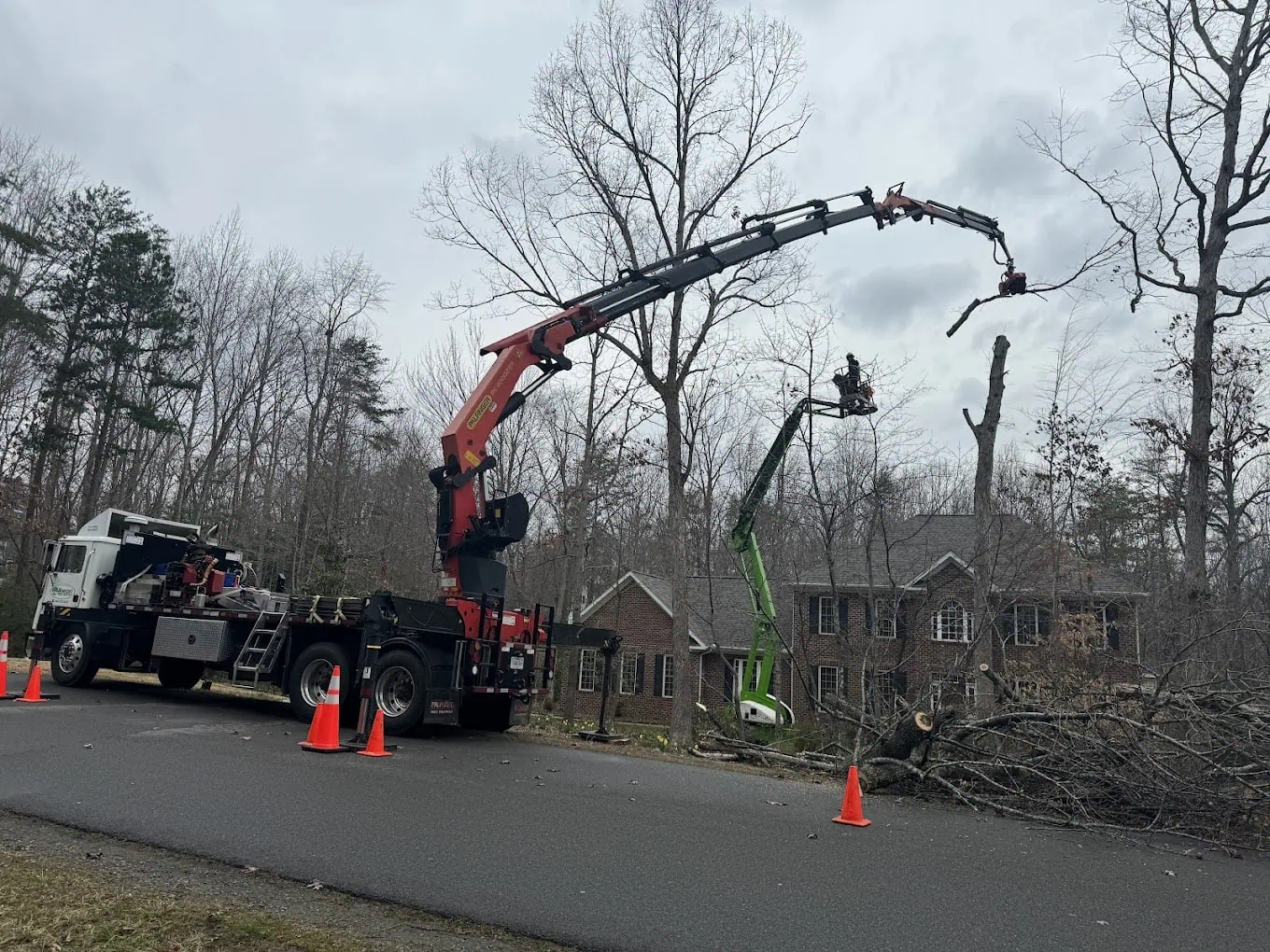
When removal is required, trained crews use controlled techniques to lower limbs and sections of trunk to the ground safely. These methods often employ rigging hardware and, where site constraints demand, crane assistance to prevent collateral damage. For many property owners, understanding these methods helps set realistic expectations about the complexity and timing of an intervention.
How Heavy Rain Affects Root Systems and Soil Around Trees
A direct answer is that heavy rain changes the mechanical properties of soil and directly stresses root systems that are already compromised. Saturated soil reduces the friction that holds roots in place and can lead to partial or full root failure. Trees growing in shallow soils, near gutters or drains, or on fill material are particularly susceptible to this type of failure after prolonged rainfall.
Repeated wet-dry cycles also encourage root decay organisms and can accelerate wood rot in the root collar. Over time, these biological processes reduce a tree’s anchorage strength even in trees that once stood firm during normal weather. Observing the base of a tree after rain for root heaving, rotten-smelling soil, or soft areas can provide early clues to deeper problems.
Preventive steps like improving drainage or avoiding soil compaction around trees can reduce the likelihood of root failure, although in many cases the age of the tree and existing structural defects will determine outcomes. When those preventive measures are not enough, professionals assess whether preservation efforts are practical or if removal is the safest option.
When to Consider Tree Stabilization Versus Removal
A direct answer is that stabilization is considered when the tree has sufficient structural soundness and value to the landscape but needs temporary or long-term support. Stabilization techniques include soil improvements, root collar excavation and treatment, cabling, and selective pruning to reduce wind and weight loads. These approaches preserve the tree while addressing the specific mechanical problem causing the lean.
Removal is chosen when the tree is compromised beyond reasonable repair or when it poses an unacceptable immediate risk to people or property. Indicators include significant decay in the lower trunk, active root rot, wide trunk cracks, or a lean that is rapidly progressing. For situations requiring removal, professional crews follow safety protocols and offer complete debris removal and cleanup to restore the site.
Decisions about stabilization versus removal are best made by experienced professionals who can weigh the probability of future failure against the costs and benefits of preserving the tree. For property owners seeking a broad explanation of what professional teams typically offer, see the Professional Tree Services description of common approaches and equipment used in these assessments.
Related resources for next steps
For more detail, review Branson’s Tree Service’s Professional Tree Services page and its About Our Certified Arborist resource before making a final plan. These pages provide additional context about the services and decisions discussed above, while keeping the focus on what applies to your property and priorities.
You can also explore Request Free Quote when that aspect of the project affects your situation. For independent background, Large, dead branches, thin leaf cover, unusually shaped leaves, and fungi are critical warning signs of tree structural defects and potential hazards. offers high-authority educational guidance that supports a careful, informed decision.
Frequently Asked Questions
1. How quickly can a leaning tree fail after heavy rain?
Leaning trees can fail within hours to days after heavy rain if root support is severely compromised. Branson’s Tree Service in Fredericksburg, VA assesses the degree of root and trunk damage quickly to prioritize urgent hazards. A rapid assessment helps determine if the tree is an immediate threat to people or structures. In many cases, early action prevents greater loss.
2. Can I stabilize a leaning tree myself to avoid removal?
DIY stabilization is not recommended because incorrect methods can increase risk and may void insurance coverage. Branson’s Tree Service in Fredericksburg, VA recommends professional evaluation to determine appropriate stabilization measures based on arboricultural best practices. Professionals use approved hardware and methods that reduce strain and avoid creating further damage. Attempting to brace or prune a dangerous tree without training can be hazardous.
3. What signs mean a leaning tree needs hazardous tree removal?
Signs that point to hazardous tree removal include large trunk cracks, exposed or severely damaged roots, visible fungal growth, and a rapid increase in lean angle. Branson’s Tree Service in Fredericksburg, VA evaluates these symptoms and documents structural defects to support safe decisions. When these indicators are present, removal is often the safest approach to protect life and property. Photos and observations gathered after the storm help clarify the risk.
4. Will removing a leaning tree damage my yard or landscaping?
Proper removal techniques are designed to minimize collateral damage while removing the hazard efficiently. Branson’s Tree Service in Fredericksburg, VA uses experienced crews, rigging techniques, and equipment selection to protect surrounding plants and structures during removal. After the tree is taken down, debris removal and cleanup are part of restoring the site. Discuss any sensitive landscape areas with the crew during planning to reduce impacts.
Conclusion
Understanding Leaning Trees starts with clear information, realistic priorities, and attention to the details that affect your property. Homeowners in Fredericksburg, VA can use the points in this guide to compare options, ask better questions, and make a confident next decision.
Branson’s Tree Service Is Ready to Help in Fredericksburg, VA
Branson’s Tree Service brings ISA-certified experience and professional equipment to assessments and hazardous tree removal in Fredericksburg, VA. If a leaning tree after heavy rain concerns you, the company offers evaluations that include documentation and cleanup to help protect property and people. Visit the Branson’s Tree Service website or use the contact form to request information and next steps.