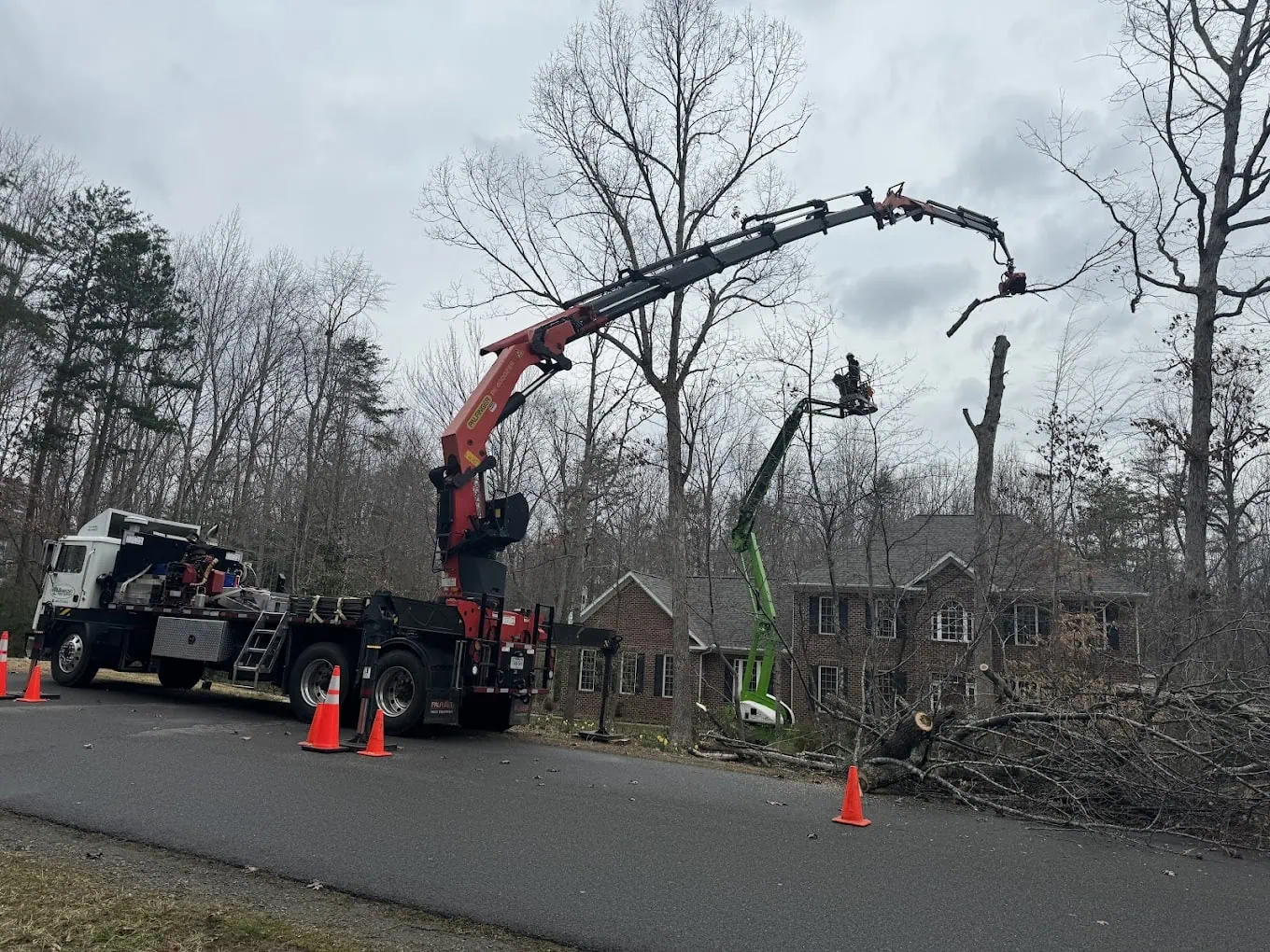
When you’re thinking about hazardous tree removal in Fredericksburg VA, homeowners often find themselves balancing potential dangers against how things look. Honestly, knowing the red flags that a tree on your property is in trouble and could be a real hazard, especially when the weather gets nasty, is super important. Catching these problems early can stop huge property damage, injuries, or even worse. Getting an ISA-certified arborist to check things out ahead of time is always your best bet against unexpected tree failures, in my experience.
It’s just not smart to wait for a storm to hit before you check your trees; that’s a reactive move that usually means expensive emergency calls and way bigger risks. Instead, if you know the common signs of a weak tree, you can actually do something before disaster strikes. You can protect your home, your cars, and everyone you care about. This guide will walk you through five crucial indicators that your tree might not survive the next big storm, making professional hazardous tree removal services in Fredericksburg VA a top priority.
Why Hazardous Trees in Fredericksburg VA Are a Big Deal
Living around Fredericksburg, we see all sorts of weather, from summer thunderstorms to those icy winter blasts. These events really test how tough our trees are. A dangerous tree, which often goes unnoticed until it’s too late, is a serious threat. Think about a tree with messed-up roots; it might look perfectly fine up top but just won’t have the stability to handle strong winds or heavy snow. So, regular check-ups aren’t just a good idea; they’re a vital safety measure for any property owner.
And it’s not just about the immediate mess a fallen tree makes. Cleaning it up can cost a fortune, and dealing with insurance claims can drag on forever. Knowing how stable your trees are is key to avoiding those headaches. That means looking for those subtle clues that hint at internal rot, disease, or structural issues that could lead to a catastrophic collapse. When you need hazardous tree removal, professionals in Fredericksburg VA can handle it safely and efficiently.
Why You Can’t Afford to Wait on Hazardous Tree Removal in Fredericksburg VA
Taking steps ahead of time for hazardous tree removal, something many Fredericksburg properties really need, can save you a ton of stress and cash down the road. Lots of homeowners put off getting their trees checked, figuring they’re fine, only to face an emergency after some nasty weather. That ‘wait and see’ approach usually means higher costs and fewer safe removal options. A good arborist can spot potential dangers long before they become critical, offering solutions from simple pruning to taking the whole tree down.
Plus, dragging your feet on a potentially dangerous tree could actually mess with parts of your homeowner’s insurance if they can prove you were negligent. Insurance companies expect property owners to keep their place maintained, and that includes dealing with known tree hazards. So, getting a hazardous tree removal service in Fredericksburg VA done proactively isn’t just about staying safe right now; it’s also smart property management and financially responsible. Don’t wait for a crisis to figure out your trees’ health.
Sign 1: Your Tree is Leaning Badly or Feels Unstable
One of the clearest signs a tree might be in trouble is if it’s leaning a lot, especially if that lean just showed up or got worse fast. Sure, some trees naturally grow at a bit of an angle, but a sudden shift in how a tree stands, or a much more pronounced lean after a storm, points to serious problems deep down. This wobbly feeling often means its root system is failing, and that’s crucial for keeping the tree upright. A leaning tree might have a root plate that’s started to lift on the side opposite the lean, which tells you it’s lost critical support.
Furthermore, soil conditions can exacerbate a tree’s lean. Saturated soil, common after heavy rains, reduces the friction and support around the roots, making it easier for a tree to shift or fall. If you notice a substantial lean in a tree, particularly if it’s near your home, driveway, or a public area, it demands immediate attention. Such a tree becomes a prime candidate for hazardous tree removal Fredericksburg VA specialists to assess and address promptly. Ignoring this sign can lead to severe consequences during high winds or heavy precipitation.
How to Identify a Dangerous Lean
Distinguishing between a natural lean and a dangerous lean requires careful observation. A tree that has grown at an angle its entire life, and appears robust, might be perfectly stable. However, look for specific clues:
- Rapid Change: Did the tree suddenly start leaning more after a recent storm or heavy rain?
- Soil Heaving: Is the soil around the base of the tree cracked or lifted on the side opposite the lean? This is a strong indicator of root failure.
- Exposed Roots: Are previously covered roots now visible or broken?
- Cracks in the Trunk: Sometimes, a severe lean can cause cracks to form in the tree’s trunk, especially on the compression side.
If any of these conditions accompany the lean, it’s time to call an expert for a thorough tree inspection. A leaning tree presents a significant risk, and professional hazardous tree removal Fredericksburg VA services can safely eliminate the danger before it escalates.
Sign 2: Large Cracks or Splits in the Trunk or Major Limbs
Cracks and splits are unequivocal signs of structural weakness within a tree. These can range from small, superficial fissures to deep, extensive ruptures that penetrate significant portions of the trunk or main branches. A large cracked tree trunk is essentially a broken tree, and its structural integrity is severely compromised. These openings provide entry points for pests and diseases, accelerating decay and further weakening the tree over time. In a storm, these cracks become critical stress points, making the tree highly susceptible to failure.
Vertical cracks, often referred to as "frost cracks" if they occur due to temperature fluctuations, can still indicate internal weakness, especially if they are deep and wide. Horizontal or spiraling cracks, however, are typically more concerning as they often signify internal stress, decay, or rot that has weakened the wood fibers. Any visible crack, especially those extending deeply into the wood, means the tree’s ability to withstand wind loads or heavy ice is drastically reduced. This is a clear warning sign that hazardous tree removal Fredericksburg VA professionals need to evaluate the tree’s stability.
The Dangers of Internal Decay and Cracks
A crack, particularly one that emits sap or shows signs of insect activity, suggests internal decay. Trees can look healthy on the outside while rotting from within. This internal weakness, combined with a visible crack, creates an extremely dangerous situation. During strong winds or the added weight of snow and ice, the tree is much more likely to split apart or fall entirely. A qualified arborist can perform tests, such as sounding the trunk or using specialized equipment, to determine the extent of internal decay.
Don’t underestimate the threat posed by a cracked tree trunk. This is not merely an aesthetic issue but a fundamental structural flaw that puts everything in its path at risk. For the safety of your property and family, contact a service specializing in hazardous tree removal Fredericksburg VA at the first sight of such severe damage. They possess the knowledge and equipment to manage such a precarious situation safely. [INTERNAL_LINK: tree removal cost guide | /tree-removal-cost]
Sign 3: Extensive Dead or Hanging Branches
Dead or hanging branches, what arborists often call "widowmakers," are a super serious, immediate danger. These aren’t connected to the tree’s living system anymore, so they’re dry and just begging to snap off, especially when the weather gets rough. Even on a calm day, a good gust of wind can send a dead branch crashing down. That’s a recipe for injuries or property damage. Spotting and dealing with these branches is absolutely crucial for tree upkeep and safety.
When you see a lot of dead branches across a tree’s whole canopy, that usually points to a bigger problem: maybe a disease, pests, or just major stress. If a tree has, say, more than a quarter of its wood dead, its overall health and structure are probably shot. This isn’t just about things falling; it also makes the whole tree weaker, way more likely to completely fail when extreme weather hits. So, if a tree’s got a ton of dead wood, it might need more than just a trim; you’re likely looking at a full hazardous tree removal in Fredericksburg VA.
Finding and Fixing Deadwood
It’s usually pretty easy to spot dead branches. Just look for these things:
- No Leaves: Dead branches won’t sprout leaves when everything else does.
- Snappy Wood: The wood feels dry and brittle; you can often snap off a small piece easily.
- Missing Bark: The bark might be peeling away or gone completely.
- Fungus: Mushrooms or other fungi growing on branches are a clear sign of rot.
Now, while you might handle small dead branches yourself, those extensive deadwood areas or big "widowmakers" really need a pro’s touch. Trying to take down a large dead branch without the right training and gear is just asking for trouble. An ISA-certified arborist can safely remove dangerous deadwood, or if the tree’s health is too far gone, they’ll recommend hazardous tree removal in Fredericksburg VA.
Sign 4: Damage or Decay Around the Tree’s Base
A tree’s stability really comes down to its roots. Honestly, without a strong, healthy root system, even a tree that looks perfectly fine can become a huge risk, especially during a storm. If you see signs of root damage or decay at the base, that’s a big red flag; it means the tree’s foundation is weak. This kind of damage can come from construction nearby, compacted soil, disease, or just plain old age and rot. Watch out for things like fungus near the base, roots that are growing around the trunk, or roots that have been cut or badly damaged.
Certain types of fungal growths, like those conks or shelf fungi popping out from the trunk’s base or big roots, definitely mean there’s serious internal decay. These fungi are basically eating the wood, making the tree weak from the inside out. Then there are girdling roots, which wrap around the trunk or other roots, essentially strangling the tree and stopping it from getting water and nutrients. That leads to a decline and instability. Any of these signs suggest a tree is in real trouble and poses a big risk, so hazardous tree removal in Fredericksburg VA is probably a smart move.
How to Spot Root Problems
Keeping an eye on the bottom of your trees can help you catch problems early. Look for:
- Fungi: Mushrooms, conks, or other fungal growths right at the base of the trunk or on exposed roots.
- Trunk Flare: The tree’s base should widen out like a bell, not go straight into the ground like a telephone pole. If it doesn’t flare, you might have deep root problems or girdling roots.
- Erosion/Disturbed Soil: A lot of soil washed away around the base, exposing major roots, or recent construction that’s cut through them.
- Heaving Earth: That lifting or cracking soil around the roots we talked about, especially on the side opposite a tree’s lean.
Any of these things mean you should call an emergency arborist right away. A storm-damaged tree with a weak root system is way more likely to fall, which is a really serious danger. Branson’s Tree Service can give you expert assessments and safe hazardous tree removal Fredericksburg VA property owners can definitely trust.
Sign 5: Big Holes, Hollow Spots, or Missing Bark
Big holes, hollow areas, or large patches of missing bark are sure signs that a tree’s structure isn’t sound. Those cavities, especially if they go deep into the trunk or main branches, point to advanced decay where the wood has just rotted away. A tree that’s hollow inside might look totally fine on the outside, but its core strength is seriously messed up. This makes it super vulnerable to snapping or toppling during strong winds, heavy snow, or even ice storms. Honestly, a tree’s strength mostly comes from its outer wood layers, but extensive internal rot can weaken it to a critical point.
Missing bark sections, particularly if you can see rotten wood underneath, also signal a big problem. Bark is what protects the tree from pests, diseases, and environmental stress. When large areas of bark are gone, the wood underneath gets exposed to moisture, fungi, and insects, which speeds up the decay process. This can easily lead to the tree failing down the road. So, any tree showing these signs really needs to be checked out by a pro. Hazardous tree removal in Fredericksburg VA might just be the safest option.
What Happens When Trees Have Cavities and Lose Bark
How risky a cavity is depends on its size and where it’s located. A small, clearly defined cavity might not be an immediate danger, but a big hollow that takes up more than a third of the trunk’s width is super dangerous. Similarly, missing bark exposes that delicate cambium layer, making it harder for the tree to move water and nutrients, which leads to its decline. A storm-damaged tree already struggling with these issues is just a disaster waiting to happen.
Please, don’t try to fill tree cavities yourself; honestly, you’ll probably just trap moisture and make the decay worse. Instead, chat with an arborist who can figure out how deep the cavity is, check the tree’s overall health, and tell you the best plan of action. Often, that means hazardous tree removal in Fredericksburg VA to avoid a catastrophic failure. Let the pros handle these tricky situations safely and quickly.
Questions People Often Ask
How can I tell if my tree is rotting inside if nothing looks wrong on the outside?
While you can see some decay from the outside, a lot of internal rot can happen without any obvious signs. An ISA-certified arborist can do a really detailed tree inspection, using tools like a mallet to tap the trunk for hollow spots, or more advanced stuff like resistance drilling or sonic tomography, to find hidden decay.
Is every leaning tree dangerous?
Not always. Lots of trees naturally lean a bit, especially when they’re reaching for sunlight. A tree becomes dangerous when it leans suddenly, or a lot, or if it comes with other signs of instability like the soil around its base lifting, exposed or broken roots, or cracks in the trunk. That’s when you’ve got a real problem.
My tree looks risky. What should I do?
If you’re worried about a tree, the smartest move is to call a qualified, insured tree service that specializes in getting rid of dangerous trees, like Branson’s Tree Service right here in Fredericksburg, VA. Don’t even think about tackling it yourself; trust me, it’s incredibly risky.
Can a tree with a huge crack be saved?
Honestly, it really depends on how bad and where the crack is, and the tree’s overall health. Little cracks might be fixable with some cabling and bracing, but deep, big cracks often mean the tree’s basically broken beyond repair. An arborist can take a look and tell you the safest way forward.
So, what’s the difference between just trimming a tree and getting rid of a hazardous one?
Tree trimming, or pruning, is all about snipping smaller branches to keep the tree healthy, looking good, or just to get them out of the way. But hazardous tree removal? That’s when you take down an entire tree that’s a real threat to people or property, maybe because it’s sick, rotting, damaged, or just unstable.
Wrapping Up
Knowing these five big red flags, a tree leaning way too much, huge cracks, lots of dead branches, root problems, or big holes, is super important for anyone who owns property and cares about safety. Trust me, ignoring these signs is just asking for trouble when the next big storm rolls through. Getting things checked out and fixed ahead of time is always the smartest and most affordable path. If you’ve got a tree that looks dicey, especially after a storm, you really need to get an ISA-certified arborist involved. For dependable and skilled hazardous tree removal in Fredericksburg, VA, Branson’s Tree Service is your go-to. They’ll give you a solid assessment and get the job done safely and efficiently, so you can stop worrying about your property.